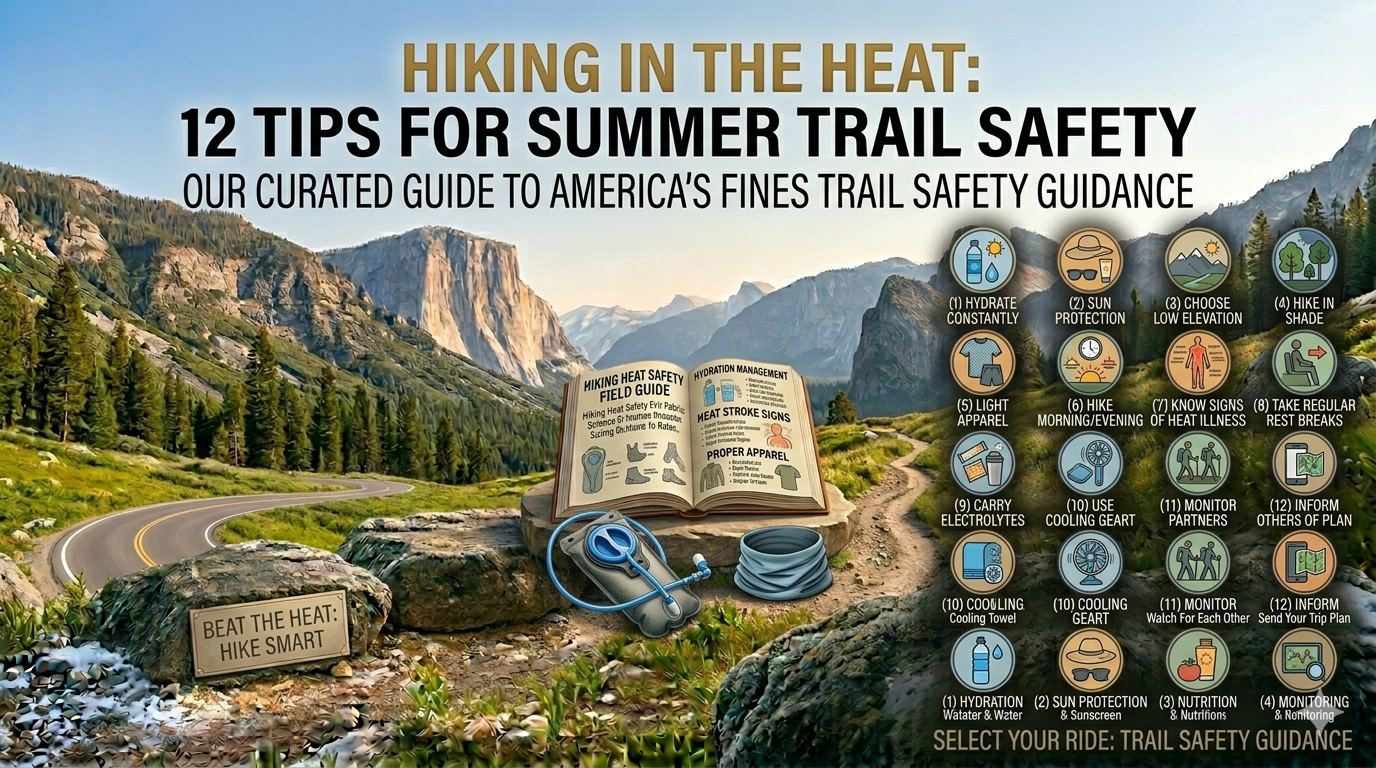
Summer hiking comes with a specific set of hazards that don't exist in spring or fall. Heat exhaustion, dehydration, UV exposure, and afternoon thunderstorms (in mountain terrain) can turn a beautiful day hike into an emergency. None of these are inevitable — with the right approach, summer is a wonderful time to be on the trail.
1. Start Before Sunrise
In desert environments and on exposed terrain, the difference between a 6 AM start and a 9 AM start can be 20–30°F. Start in the dark if you need to, finish before the hottest part of the day (typically 11 AM–3 PM), and you've solved most of your heat problems before they start.
2. Calculate Water Needs Correctly
The general rule — half a liter per hour — assumes moderate conditions. In summer heat, double it. A 4-hour hike in 90°F weather may require 4 liters of water. Carry more than you think you'll need. Know where water sources are and carry a filter. Running out of water in summer heat is how hikes become rescues.
3. Electrolytes, Not Just Water
Drinking large amounts of water without replacing electrolytes (sodium, potassium, magnesium) can cause hyponatremia — dangerously low blood sodium. On hot hikes, supplement with electrolyte tabs, sports drink powder, or salty snacks. Electrolyte tablets are lightweight and effective.
4. Know the Signs of Heat Exhaustion
Heavy sweating, weakness, cold/pale/clammy skin, weak pulse, nausea, muscle cramps. This is the warning stage before heatstroke. Treat immediately: rest in shade, cool the person down (wet clothing, fanning), and give water and electrolytes. If symptoms progress to hot/red/dry skin, confusion, or loss of consciousness — that's heatstroke. Call for help.
5. Dress for the Sun
Counterintuitively, covering up with lightweight, light-colored, UPF-rated clothing keeps you cooler than bare skin in direct sun. A long-sleeve UPF 50 shirt reflects UV and reduces evaporative cooling loss compared to bare skin. Add a wide-brim hat and sunglasses.
6. High SPF, Reapplied
SPF 30 minimum; SPF 50 is better at elevation. Reapply every 90 minutes and more frequently if sweating heavily. Don't forget ears, the back of the neck, the tops of your feet (if wearing sandals), and lips (SPF lip balm).
7. Soak Your Hat and Shirt
If you encounter a stream crossing, soak your hat and shirt before continuing. Evaporative cooling is real — wet fabric next to skin can reduce perceived temperature significantly on dry, hot days.
8. Slow Down
Your cardiovascular system works harder in heat. The same hike that took 3 hours in May may take 4 hours in July. Build this into your planning and turnaround decisions.
9. Plan for Thunderstorms
In the Rockies, Sierra, and most mountain ranges, afternoon thunderstorms are nearly daily occurrences in summer. Aim to be off exposed ridges and summits by noon. If you see anvil clouds building, descend immediately. Lightning above treeline is not something to gamble with.
10. Tell Someone Your Plan
Leave a trip plan with a friend or family member — trailhead, expected route, expected return time. If you're not back by that time, they call for help. This is particularly important for solo hikers in remote areas.
11. Pre-Hydrate
Drink 16–20 oz of water in the hour before you start hiking. Starting a hike already dehydrated means you're playing catch-up all day.
12. Know When to Turn Around
Summit fever causes bad decisions. If you're feeling lightheaded, unusually fatigued, nauseated, or confused, turn around immediately regardless of how close to the top you are. The mountain will be there next time.
Gear for Summer Hiking
- 3L hydration bladder — makes drinking while moving easy
- UPF 50 long-sleeve shirt
- Electrolyte packets
- SPF 50 sport sunscreen