🏜️
Grand Canyon National Park
AZ
Est. 1919
1,217,262 acres
Log in to track your visit to Grand Canyon National Park.
⭐ Must-See
• South Rim
• Bright Angel Trail
• North Rim
• Colorado River Rafting
About Grand Canyon National Park
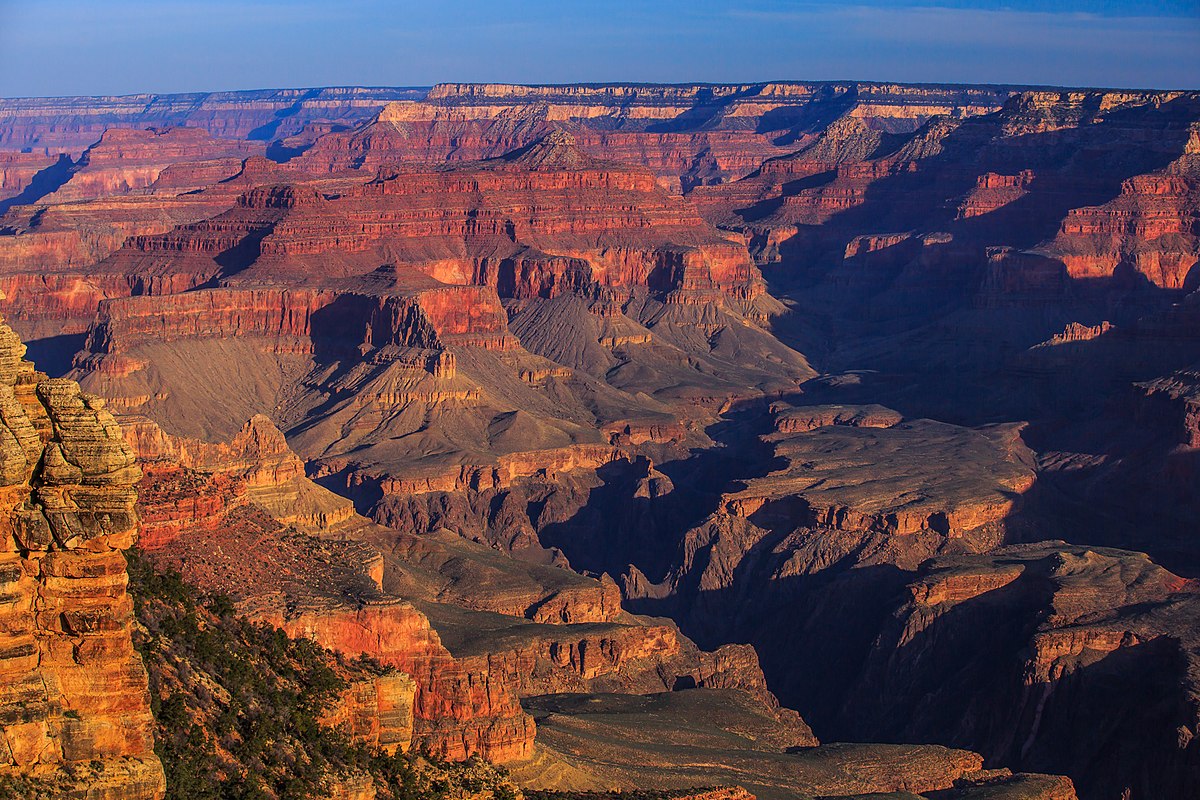
Grand Canyon National Park in northwestern Arizona protects one of the world's most recognizable and geologically extraordinary landscapes: a chasm one mile deep, 277 river miles long, and up to 18 miles wide carved over five to six million years by the Colorado River through layer upon layer of ancient rock. The canyon's oldest exposed rocks, the Vishnu Basement Rocks visible at river level near Phantom Ranch, are approximately 1.84 billion years old — nearly half the age of the Earth itself. Established as a national park in 1919, the Grand Canyon covers 1.2 million acres and receives roughly five million visitors per year, making it one of the most visited national parks in the country. The South Rim is open year-round and is the hub for the vast majority of visitor activity. The North Rim, higher in elevation and cooler, opens in mid-May and closes after the first heavy snowfall, typically in mid-October. Whether you peer over the rim for the first time or descend to the canyon floor on a multi-day river expedition, the Grand Canyon's scale defies expectation and humbles even seasoned travelers.
🥾 Things to Do
Hiking into the canyon is the experience that separates a rim visit from a true Grand Canyon adventure. The Bright Angel Trail — beginning at the South Rim's Bright Angel Trailhead — is the most popular inner-canyon route, dropping 4,380 feet over 9.5 miles to Phantom Ranch at the Colorado River. Three-Mile Resthouse and Indian Garden (Havasupai Gardens) are excellent turnaround points for day hikers. The South Kaibab Trail offers more exposed ridgeline walking and stunning panoramas; Cedar Ridge (3 miles round trip) and Skeleton Point (6 miles round trip) are classic day destinations. The flat, paved Rim Trail stretches 13 miles along the South Rim, linking viewpoints from Hermits Rest to South Kaibab Trailhead — shuttle buses cover the route. Colorado River rafting through the canyon is among the bucket-list experiences of the American West: commercial trips run 3 to 21 days through 160 named rapids, including the legendary Lava Falls. Mule rides to Phantom Ranch must be reserved up to 13 months in advance. Ranger-led programs, geology talks, and Junior Ranger activities operate year-round at the South Rim.
🦌 Wildlife & Ecosystems
California condors — once extinct in the wild — now soar on thermals above the canyon rim in recovering numbers. Their 9.5-foot wingspans are unmistakable as they ride updrafts near Bright Angel Point and Desert View. Mule deer graze the rim meadows and frequently approach the Grand Canyon Village, while elk (introduced in the early 20th century) are common on both rims. Ravens are bold and numerous, particularly near picnic areas. Down in the inner canyon, ringtail cats, western rattlesnakes, canyon wrens (listen for their cascading, descending call), and the tiny rosy-pink Grand Canyon pink rattlesnake — a subspecies found nowhere else — make their home among the rocks and desert scrub.
📅 Planning Your Visit
The park entrance fee is $35 per vehicle, and the America the Beautiful annual pass is accepted. Grand Canyon Village on the South Rim has hotels (Bright Angel Lodge, El Tovar), restaurants, a general store, and visitor centers — book accommodations six months to a year in advance. The free Hermit Road shuttle operates March through November, eliminating the need to drive the western rim road. Timed-entry permits have been piloted for high-demand periods; check the NPS website for current requirements before visiting. Inner-canyon camping at Bright Angel Campground or Cottonwood Campground requires a Backcountry Permit, which is issued by lottery four months in advance.
🗺️ Getting There
The South Rim Visitor Center is 60 miles north of Williams, Arizona via AZ-64, and 80 miles northwest of Flagstaff. Flagstaff Pulliam Airport (FLG) has daily service from Phoenix and Los Angeles. Amtrak's Southwest Chief stops in Williams, where a historic Grand Canyon Railway train runs 2.5 hours to the South Rim. The North Rim is 215 miles from the South Rim by road (5-hour drive) and sits 44 miles south of Jacob Lake on US-89A.
💡 Visitor Tips
Never hike to the river and back in a single day on the South Kaibab or Bright Angel trails — the NPS strongly discourages it, and heat emergencies are common. Start any inner-canyon hike before sunrise, carry a liter of water per hour of hiking, and turn around no later than noon in warm months. Phantom Ranch reservations — the only lodging below the rim — open 13 months ahead and sell out in minutes; set a calendar reminder. Avoid summer if possible: the rim is pleasant, but trail temperatures at river level can exceed 110°F. Shoulder seasons (March–May and September–November) offer the best combination of mild temperatures and manageable crowds.
Trails Near Grand Canyon National Park
Tanque Verde Ridge Trail — Tucson, Arizona
Arizona 16.5 miles mi Hard
Treasure Loop Trail — Gold Canyon, Arizona
Arizona 4.4 miles mi Moderate
Tom's Thumb Trail — Scottsdale, Arizona
Arizona 4.3 miles mi Hard
Picacho Peak Summit Trail — Picacho, Arizona
Arizona 2.0 miles mi Hard
South Mountain Park National Trail — Phoenix, Arizona
Arizona 14.7 miles mi Moderate
Bell Rock Pathway — Sedona, Arizona
Arizona 3.6 miles mi Easy
Havasupai Falls Trail — Supai, Arizona
Arizona 10.0 miles mi Hard
West Fork Oak Creek Canyon — Sedona, Arizona
Arizona 6.9 miles mi Easy