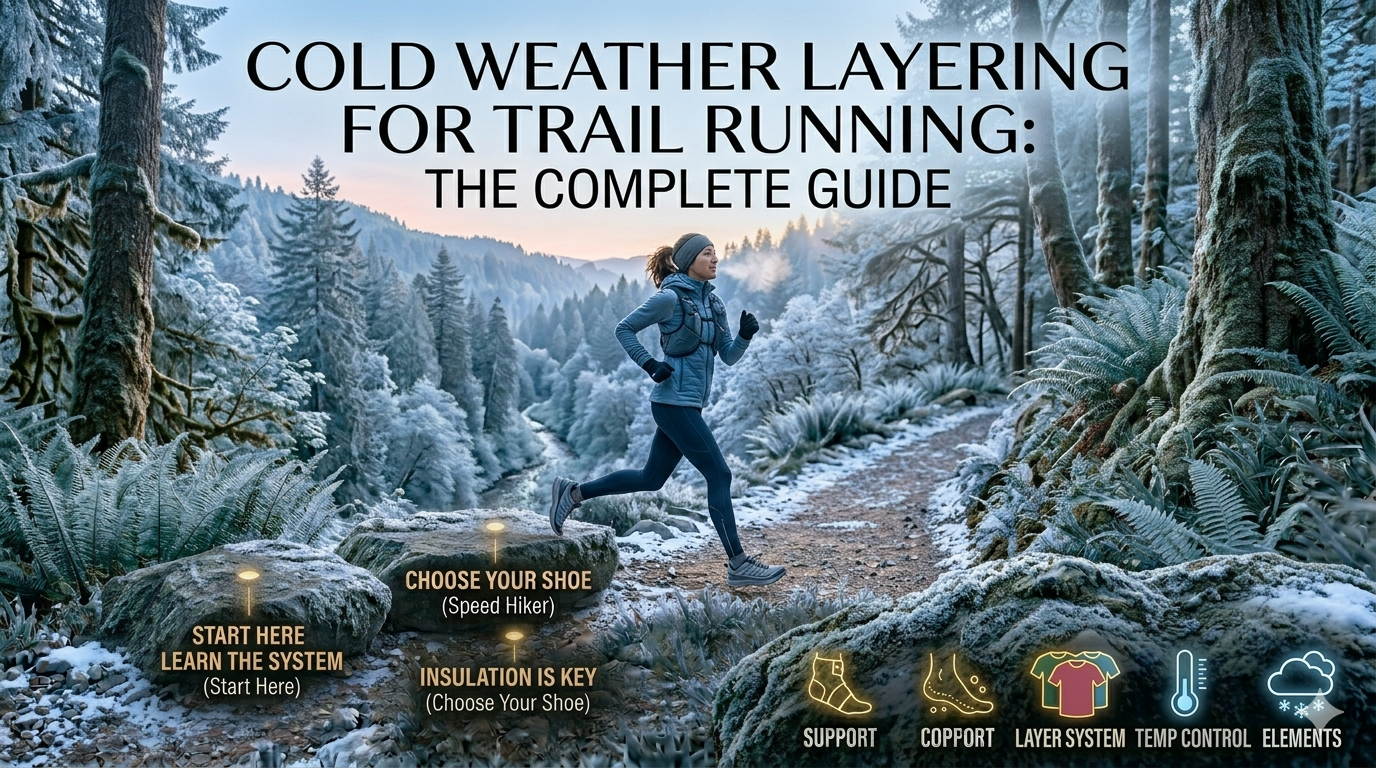
Cold weather trail running is genuinely enjoyable once you figure out the clothing. The biggest mistake runners make is dressing for standing still — you generate enormous heat when running, so overdressing causes overheating and soaking your base layer with sweat, which then chills you when you slow down or stop. The key is a layering system that manages moisture and allows ventilation while protecting against wind and precipitation.
The Running Layering System
Base Layer: Moisture Management First
Your base layer's job is to pull moisture (sweat) away from your skin and allow it to evaporate. Merino wool is the gold standard — it manages moisture well, resists odor, and provides light insulation even when damp. Synthetic options (polyester-based) dry faster and cost less.
Weight: for temperatures above 30°F, a lightweight base layer is enough. Below 20°F, a midweight merino base layer becomes the foundation of the whole system.
→ Merino wool running base layer on Amazon
Mid Layer: Packable Insulation (Optional)
In the 20–40°F range, many runners run comfortably with just a base layer and wind shell. Below that, a lightweight insulated mid-layer bridges the gap. Look for a running-specific design — thin, stretchy, packable, and cut for running movement. Primaloft or down with a DWR finish handles light precipitation.
→ Packable running insulated jacket on Amazon
Outer Layer: Wind and Weather Protection
A lightweight wind shell or softshell is often all trail runners need as an outer layer. Full waterproof/breathable membranes (Gore-Tex and similar) work but are heavier and less breathable for high-output running. For running in rain, a hardshell that breathes well is necessary; for wind and light precipitation, a wind shell suffices.
→ Running wind shell jacket on Amazon
Extremities
Hands: Hands get cold fast and warm up quickly — lightweight gloves work for most running temperatures. Below 20°F, add a wind-blocking shell over a thin liner glove. Running-specific gloves often have touchscreen fingertips and reflective panels.
Head: A thin running beanie covers most temperatures. For extreme cold, balaclava + beanie. Ear covers alone work for mild cold (35–45°F).
Feet: Wool or synthetic wool blend running socks are the best cold-weather foot solution. Waterproof socks (like DryMax or SealSkinz) add protection in wet conditions but reduce breathability.
Temperature Guide (Approximate)
- 50–60°F: Short-sleeve tech tee, shorts or tights
- 40–50°F: Long-sleeve base layer, shorts or tights, light gloves
- 30–40°F: Long-sleeve base, wind shell, tights, gloves, ear cover
- 20–30°F: Merino base layer, mid-layer, wind shell, thermal tights, gloves, beanie
- Below 20°F: Add balaclava, warmer gloves, consider windproof tights, check for ice on trail
The Cardinal Rule: Dress for 10–15°F Warmer Than Actual Temperature
You will warm up significantly once running. If you step out the door and feel perfectly comfortable, you're already overdressed for the first mile. You should feel slightly cold in the first few minutes — that's correct. Carry a packable layer in a vest or waist pack for descents and stops.