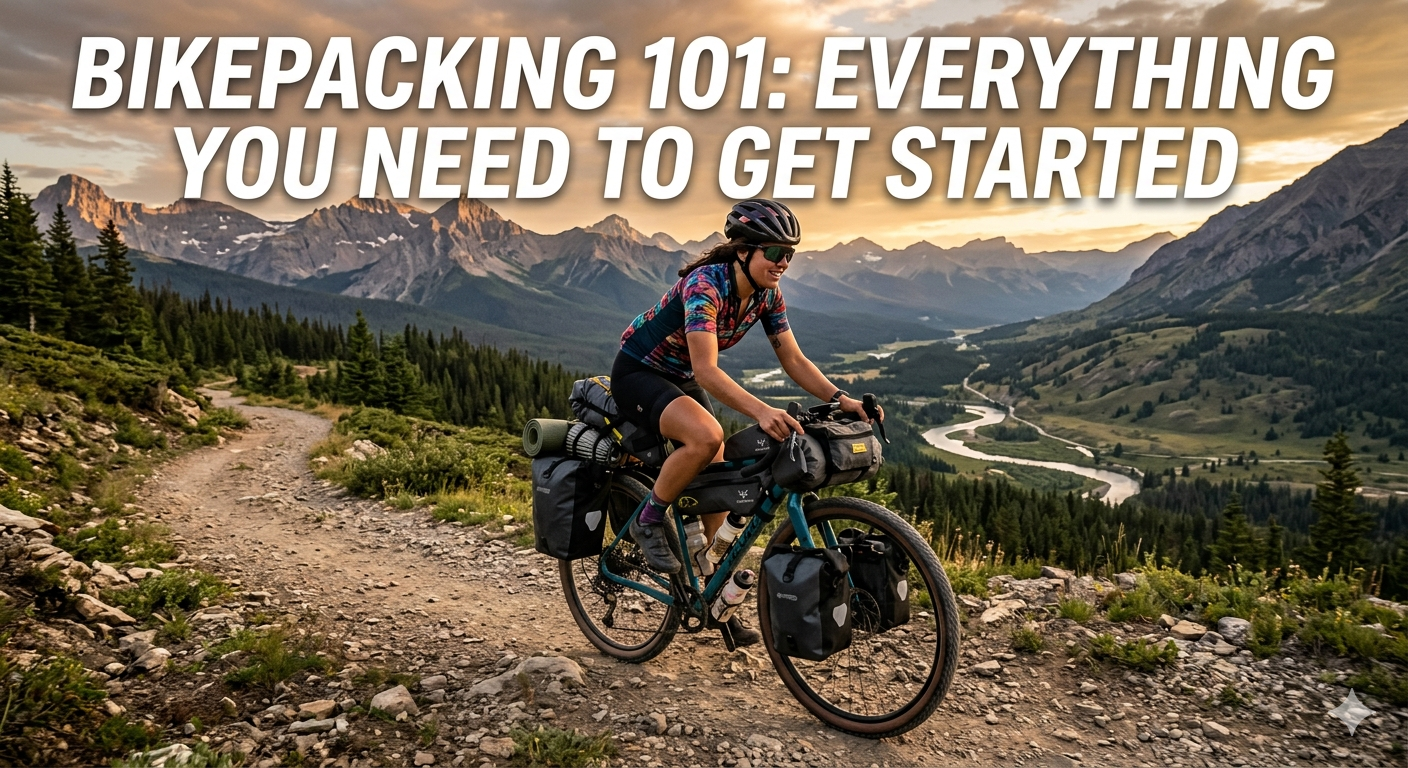
Bikepacking is the intersection of mountain biking and backpacking: you ride a bike (often on dirt roads, gravel, and singletrack) while carrying everything you need to camp overnight. Unlike traditional cycle touring with panniers, bikepacking uses bags that attach directly to the frame, fork, and handlebars — keeping weight low and centered, and allowing the bike to handle terrain that would be impossible with loaded racks.
You don't need a special bike or thousands of dollars of gear to get started. Here's the practical breakdown.
The Bike
Any bike with flat handlebars, tire clearance for 2"+ tires, and mounting points for bags can bikepack. Gravel bikes, hardtail mountain bikes, and full-suspension MTBs all work. A gravel or hardtail is the most common starting point — they're lighter than full-suspension, handle unpaved roads well, and have the mounts you need.
You do NOT need a new bike. Ride what you have and upgrade as you learn what you actually need.
The Bags
Bikepacking bags replace panniers and racks. The core setup:
- Frame bag: Fills the triangle of the bike frame. Carries the heaviest items — food, tools, water.
- Handlebar bag/roll: Lightweight roll that clips to the handlebars. Sleeping bag or pad typically goes here.
- Saddle bag/drybag: Attaches under the seat. Tent or shelter, clothing layers.
- Top tube bag: Small pouch for snacks, phone, wallet — things you need while riding.
- Fork bags: Mounting to fork legs; adds significant carry capacity for water or a tent.
→ Bikepacking bag starter sets on Amazon
The Gear (Ultralight Principles Apply)
You have significantly less carrying capacity than hiking with a backpack. Every gram matters more. Prioritize:
- Shelter: A bivy + tarp or an ultralight single-wall tent. The lighter the better.
- Sleep system: A quilt rather than a sleeping bag saves weight and packs smaller.
- Clothing: 2 days of riding kit, 1 camp outfit, 1 rain layer. That's it.
- Food: Calorie density matters — target 100+ calories per ounce. Nut butters, bars, dehydrated meals.
- Water: A filter + collapsible bottles. Water is heavy; source it on route.
Your First Route
Start small. A one-night shakedown close to home reveals every problem with your setup — and there will be problems. Pack too much, suffer for a day, and you'll know exactly what to cut next time.
Resources for finding routes: Bikepacking.com has a massive route library. Adventure Cycling Association maps are excellent for longer routes. Komoot and Strava route planning both work well.
Essential Tools to Carry
- Multi-tool with chain tool
- Tubeless plug kit
- Mini pump or CO2 cartridges + inflator
- Spare tube (even with tubeless)
- Chain lube and a rag
- Cash and a credit card — civilization is a bailout option
Navigation
A dedicated GPS cycling computer (Garmin Edge or similar) with offline maps is the standard bikepacking nav setup. Phone mount + offline maps app (Gaia GPS, Komoot) works too but drains battery faster.
The Verdict
Bikepacking is one of the most freeing ways to travel. You cover more ground than hiking, access places cars can't reach, and the camp-from-the-bike simplicity makes multi-day adventures accessible in ways traditional backpacking sometimes isn't. Start with a one-nighter and go from there.