📍 Recent Trail Conditions
Log in to report🚵 Trail Info
🗺️ Trail Map
📈 Elevation Profile
🌤️ 3-Day Forecast
Forecast unavailable for this trail.
Mention Moab to any mountain biker and their eyes light up. And within Moab's incredible riding scene, one trail sits above the rest in reputation: Slickrock. Carved across a sea of ancient Navajo sandstone just outside town, Slickrock is a 10.5-mile loop of grippy, undulating rock that has been humbling riders — and converting skeptics into lifelong mountain bikers — since the 1960s.
What Makes Slickrock Different
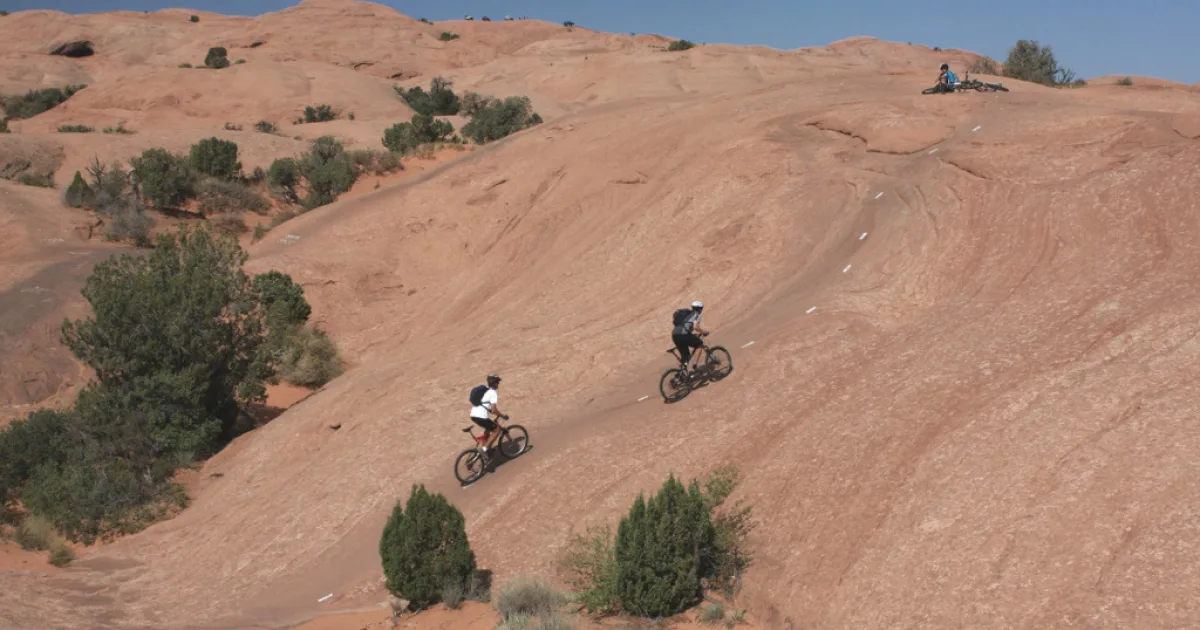
Slickrock isn't a dirt trail. It's petrified sand dunes — a wave-like expanse of salmon-colored sandstone with a surface so coarse it grips tire rubber like velcro. The traction is remarkable. You can ride up slopes that look impossibly steep because the rock holds you. That same friction, though, demands total commitment: hesitate mid-climb and you'll lose momentum; overcook a descent and the same rock that seemed friendly will remind you who's in charge.
The terrain is relentlessly technical. You'll encounter steep climbs, exposed ridgeline riding, tight turns around rock ledges, and a handful of mandatory dismounts (for most riders) on the most severe pitches. A white-dotted line painted on the rock marks the route — follow it carefully, especially in the early miles while you're getting a feel for the surface.
The Practice Loop
Before committing to the full trail, first-timers should ride the 2.3-mile Practice Loop, which departs from the same trailhead. It's shorter and slightly less severe, but it gives you an honest preview of what's ahead. If the Practice Loop feels manageable, the full trail is within reach. If it feels terrifying, come back when your skills are sharper — there's no shame in it.
Difficulty: Be Honest With Yourself
Slickrock is rated Expert for good reason. This is not a trail for beginners, and it's a genuine challenge for intermediate riders. You should be comfortable riding technical terrain, have solid bike-handling skills, and be able to navigate steep climbs and descents before attempting the full loop.
Tips for Riding Slickrock
- Lower your tire pressure. Drop a few PSI from your normal pressure to maximize that sandstone grip. Many riders go 25–30 PSI on the rear.
- Ride in spring or fall. Summer temperatures in Moab regularly hit 100°F+. March–May and September–October are ideal. Avoid midday in any season.
- Bring more water than you think. There is zero shade on the trail and desert air is deceptively drying. Bring at least 3 liters.
- Don't underestimate the time. Slickrock takes most riders 3–4 hours. Factor in breaks and the inevitable "where does the trail go?" moments.
- Protect your knees and elbows. Falling on sandstone is unpleasant. Knee and elbow pads are worth wearing.
Gear We Recommend
- Mountain bike knee pads — sandstone is unforgiving
- Hydration pack (3L+)
- Helmet — a full-face or trail helmet is smart here
Getting There
The Slickrock trailhead is at 6100 Sand Flats Road, Moab, UT 84532 — about 2 miles east of downtown Moab. There's a $5 day-use fee for the Sand Flats Recreation Area (cash or card). No permit required beyond the day-use fee.
The Verdict
Slickrock is as good as its reputation — but it earns that reputation by being genuinely hard. Skilled riders will find it one of the most exhilarating rides they've ever done. Intermediate riders will find it a character-building challenge. Beginners will find it a useful reminder to build more skills first. Go in spring, go with enough water, and go with respect for the terrain.