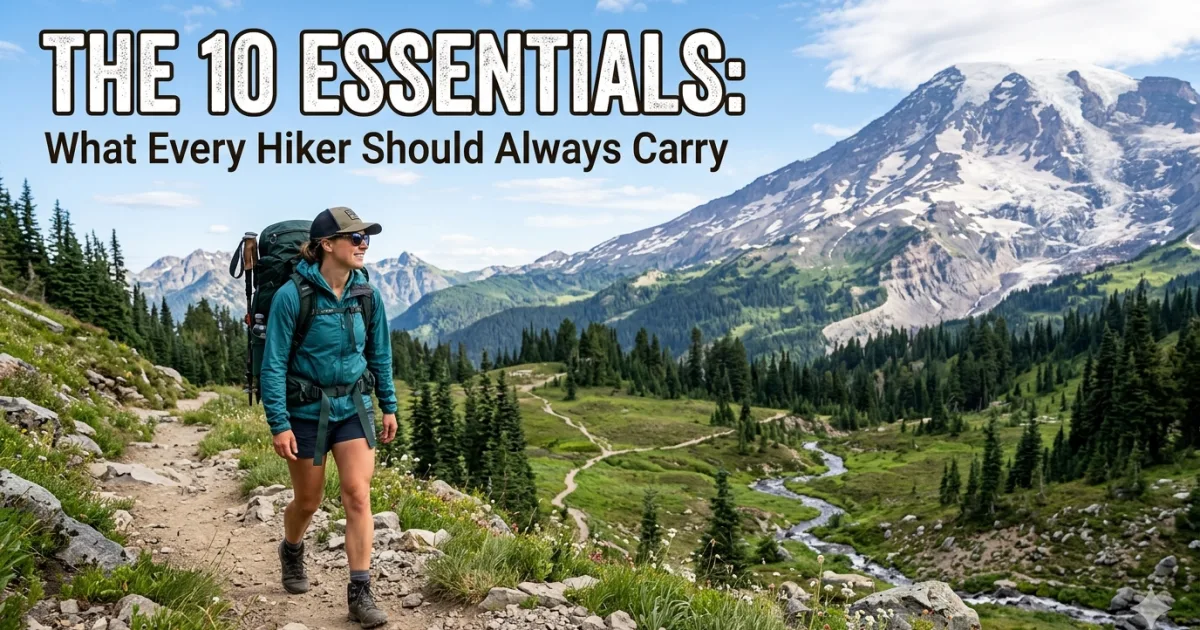
The "10 Essentials" system was developed by The Mountaineers in the 1930s and has been refined ever since. The idea is simple: these are the categories of gear that have the biggest impact on your ability to survive and self-rescue if something goes wrong on the trail. They're not optional. Here's the list — and what we actually carry.
1. Navigation
Your phone's GPS works until the battery dies or you lose signal. Carry a physical map of the area and know how to use it. A compass is small and never runs out of batteries. For most hikes, a downloaded offline map on AllTrails or Gaia GPS is a minimum; paper map + compass is better.
2. Sun Protection
Sunscreen, sunglasses, and a hat. At elevation, UV exposure increases significantly — about 4% per 1,000 feet. Don't skip this even on cloudy days.
→ SPF 50 sunscreen | → Polarized sunglasses
3. Insulation
Weather changes fast in the mountains. Always carry an extra layer — even on warm summer days. A lightweight puffy jacket packs small and could save your life if you're still on the trail when a storm rolls in.
4. Illumination
Headlamps are non-negotiable. Even if you plan to be back before dark, plans change. Carry a headlamp with fresh batteries. A small backup flashlight doesn't hurt.
5. First-Aid Supplies
A basic kit should cover blisters (moleskin and bandages), cuts and scrapes (gauze, antiseptic wipes, medical tape), and basic pain relief (ibuprofen). For longer or more remote trips, add SAM splints, a CPR face shield, and blister treatment.
→ Adventure Medical Kits Day Tripper
6. Fire
Waterproof matches or a lighter, plus fire-starting material. In an emergency, fire provides warmth, signals rescuers, and purifies water. Keep them in a waterproof bag.
→ Waterproof matches + firestarter
7. Repair Tools and Knife
A multi-tool or knife handles most trail repairs — cutting moleskin, fixing gear, emergency shelter building. Duct tape wrapped around a water bottle covers the rest.
8. Nutrition
Bring more food than you think you need — at least one extra day's worth of emergency calories. Trail mix, energy bars, and jerky are all good choices. Running low on food impairs judgment exactly when you need it most.
9. Hydration
Water and a way to purify more. The rule of thumb is half a liter per hour of hiking in moderate conditions — more at elevation or in heat. A filter or purification tablets mean you can safely drink from streams if you run out.
10. Emergency Shelter
A lightweight emergency bivy or space blanket takes up almost no space and can keep you alive overnight if you're injured or lost. This is the essential most people skip — and the one they'd be most grateful to have.
The Bottom Line
These 10 categories fit in any daypack without adding significant weight or cost. Most of the items above total under $150, and you'll use them on every hike. More importantly, carrying them means that if something does go wrong — a twisted ankle at mile 8, an unexpected storm, a trail that becomes impossible to follow in the dark — you're prepared to handle it.
The most expensive rescue is the one you could have prevented.
We use affiliate links. If you buy through them, we earn a small commission at no cost to you. Full disclosure.